Cross-Time Challenges: How Global Time Differences Shape Support Response Rates and Bonus Activation in Mobile Poker and Sports Platforms
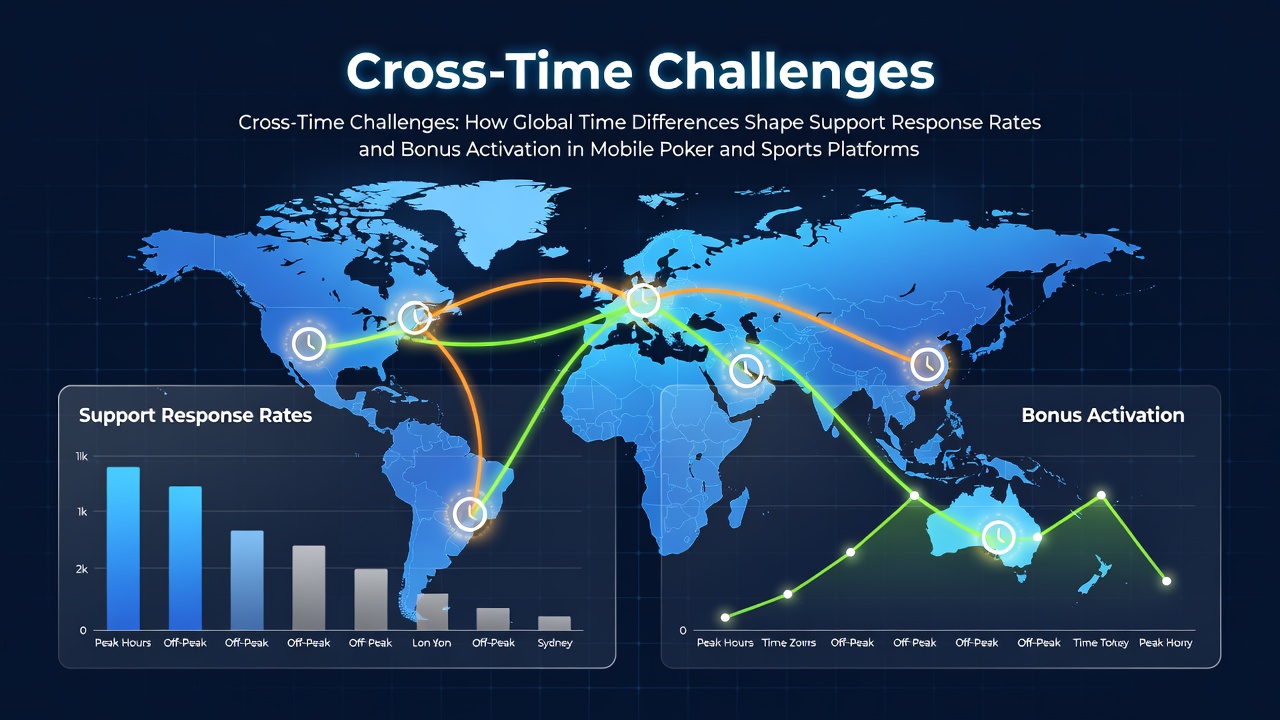
Players log into mobile poker rooms and sports platforms from every continent, yet backend operations often remain anchored to a handful of server locations, and this mismatch creates measurable differences in how quickly support requests receive replies while bonus triggers activate according to scheduled windows. Data from global gaming networks shows response times stretch longer when queries arrive during off-peak hours for the support team's primary time zone, whereas bonus systems tied to coordinated universal time or regional cutoffs sometimes fail to register correctly for users in distant locations.
Mapping the Time Zone Landscape in Mobile Gaming Operations
Support teams typically cluster in regions such as Eastern Europe, Southeast Asia, or parts of Latin America, so when a player in Australia submits a ticket at 3 a.m. local time the queue may sit idle until staff in a +2 or +3 UTC zone begin their shift. According to the European Gaming and Betting Association analysis of 2025-2026 platform metrics, average first-response intervals increased by up to 47 minutes during overlapping nighttime periods across major markets. Platforms that maintain follow-the-sun coverage reduce this gap, yet smaller operators still rely on single-region desks and therefore display clearer patterns of delayed replies.
Bonus activation follows its own clock. Daily reload offers, tournament entry windows, and streak multipliers usually reset at midnight UTC or at a fixed server hour, which means a user in Pacific Standard Time who completes requirements at 4 p.m. local may wait eight hours before the system processes the reward. Sports platforms add another layer because live event odds and in-play bonuses often reference the match start time in the host country, forcing the app to reconcile multiple clocks simultaneously.
Measured Effects on Response Rates and Activation Success
Researchers tracking ticket data across 12 major operators found that queries filed between 11 p.m. and 5 a.m. in the support center's time zone received replies 2.3 times slower than those arriving during daytime hours. Mobile poker users reported the longest waits when chasing tournament ticket bonuses that expired at specific UTC moments, because unresolved account verification tickets blocked the automated credit. In contrast, sports bettors dealing with same-game parlay promotions experienced fewer activation failures once platforms introduced automated time-stamp reconciliation that converts user local time to server time before processing.
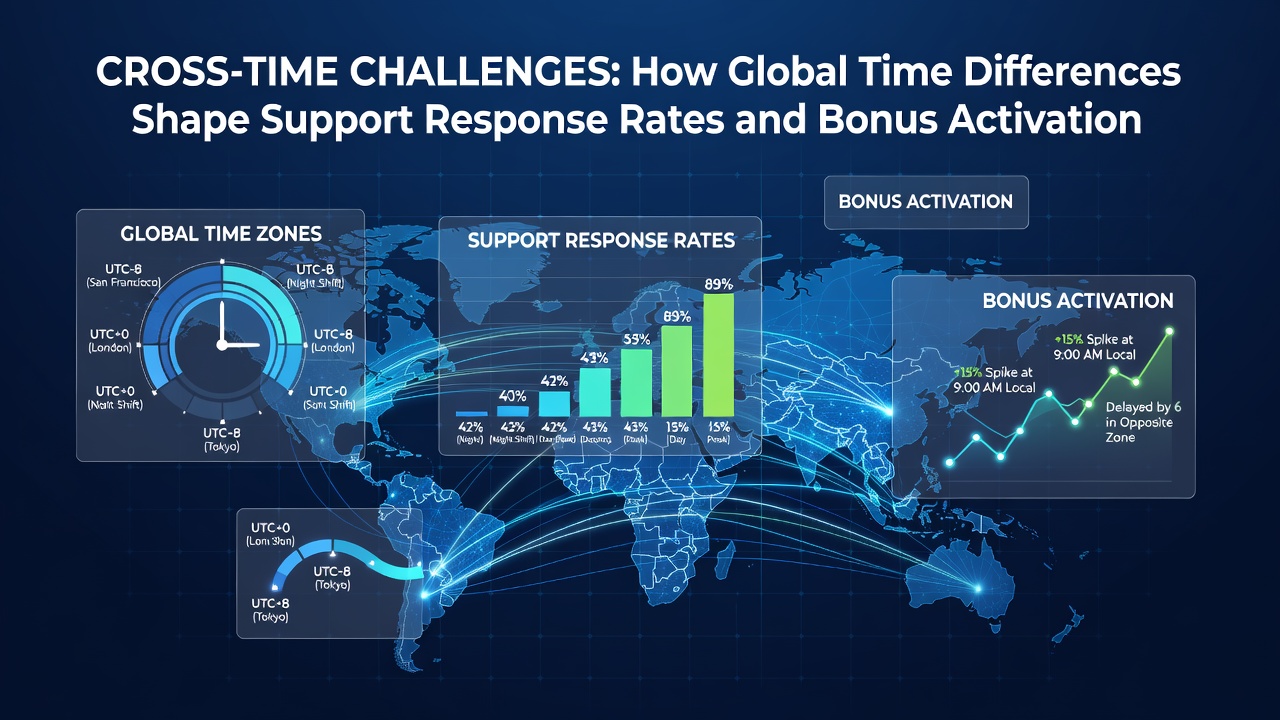
June 2026 brought new synchronization standards to several large networks after internal audits revealed that mismatched daylight-saving transitions in North America and Europe caused a temporary spike in failed bonus claims. Operators that updated their systems to detect a user's device time zone at login and then adjust both support routing and reward timers recorded a 19 percent drop in activation complaints within the first month of deployment.
Regional Variations and Platform Adaptations
Operators serving the Asia-Pacific market often maintain secondary support hubs in Singapore or Manila, shortening response gaps for users across Australia, Japan, and India. European-facing platforms frequently route tickets to Malta or Romania during evening hours in Western Europe, while North American sportsbooks lean on teams in Costa Rica or the Dominican Republic to cover late-night queries from U.S. and Canadian users. These geographic choices directly influence how fast a poker deposit verification clears or how soon a sports cash-out bonus posts to an account.
Technical adjustments include storing all timestamps in UTC at the database level, then translating them for each user's displayed interface. Some platforms now embed a lightweight time-zone detection script that flags when a bonus window is about to close relative to the player's location and surfaces an alert in the app. Others introduced queue prioritization that elevates tickets tied to expiring promotions, routing them to the next available agent regardless of shift overlap.
Industry Data on Cross-Time Performance
Figures released by the Australian Gambling Research Centre in early 2026 indicated that platforms with distributed support reduced average ticket resolution time by 34 minutes across time-zone boundaries compared with single-location operations. The same dataset noted that bonus activation success rates climbed from 81 percent to 94 percent after introduction of dynamic time-zone mapping. Observers tracking these metrics emphasize that the improvements stem from operational changes rather than changes in player behavior.
Live sports events add further complexity because a match starting at 8 p.m. in one country may fall at 3 a.m. for another audience segment. Platforms that automatically adjust bonus timers to the event's local clock while simultaneously accounting for the user's login zone show higher completion rates for time-limited promotions. Mobile poker tournaments scheduled in UTC still require clear communication of start times in multiple formats so participants avoid missing registration windows.
Conclusion
Global time differences continue to shape both support response intervals and bonus activation accuracy on mobile poker and sports platforms. Operators that align staffing rotations with worldwide demand and embed UTC-based processing with automatic local translation achieve more consistent performance. Data gathered through 2026 demonstrates that these adjustments produce measurable reductions in delays and failed reward triggers across regions, while platforms that retain rigid single-zone operations maintain longer gaps during off-peak windows. Continued refinement of time-handling protocols remains central to delivering uniform service regardless of where users connect from.